Every business leader knows the struggle of staying ahead in a world that never slows down. The question isn’t if you’ll face challenges, but when and how you’ll overcome them.
Enter the era of AI in business—a true game-changer reshaping the competitive landscape. It’s not just about adopting new technology; it’s about surviving and thriving in an increasingly digital world.
At Prime Concepts Group, we understand this new battlefield and are dedicated to equipping your company with AI tools to not only face but conquer future challenges. Here are some essential tips from our CEO, Ford Saeks, on how to begin your AI journey.
1. Streamline Workflows with AI in Business
AI in business presents a powerful toolkit for reshaping operations, offering transformative potential that can touch every aspect of an organization. By leveraging artificial intelligence, companies can streamline workflows, unveiling efficiencies previously unseen. This technology excels in analyzing vast amounts of data with precision, providing insights that guide more informed strategic decisions.
2. Personalize Customer Interactions
AI in business has the capability to tailor interactions with customers, introducing a level of personalization that can significantly enhance the customer experience. These advancements, when implemented thoughtfully and with strategic foresight, position AI not merely as a technological tool but as a pivotal component in driving a business forward in an increasingly digital landscape.
3. Implement Ethical AI Guidelines
As businesses embark on the AI journey, laying the groundwork for ethical AI practices becomes paramount. The advent of AI in business offers immense potential but also necessitates a vigilant approach to its application. Establishing ethical AI guidelines is a critical first step in ensuring that AI technology not only advances your business objectives but does so in a manner that respects privacy, secures data, and adheres to the highest standards of ethical conduct.
4. Ensure Data Privacy and Compliance
Crafting these guidelines involves a thorough understanding of both the capabilities of AI and the ethical considerations that come with its use. This means identifying potential biases in AI algorithms and taking steps to mitigate them, ensuring transparency in AI-driven decisions, and safeguarding customer and employee data against misuse. Compliance with existing laws and regulations surrounding data privacy and protection is not just a legal requirement but a cornerstone of building trust with your customers and stakeholders.
5. Align AI with Your Brand Values
Implementing ethical AI practices requires commitment across all levels of your organization. It’s about fostering a culture that prioritizes ethical considerations in every AI initiative you undertake. By doing so, you’re not just leveraging AI for its technological benefits; you’re also reinforcing your brand’s commitment to ethical responsibility and integrity. This foundational step is critical for businesses looking to harness AI in business responsibly and sustainably.
6. Establish Best Practices for AI Implementation
When venturing into the realm of AI integration, it’s crucial to approach this transformation with a detailed and methodical plan. Best practices serve as your roadmap, guiding each step of AI implementation to ensure it aligns with both your operational objectives and ethical standards. Start by clearly defining the roles that AI will occupy within your organization. Will it enhance customer service, streamline operations, or drive your marketing strategies? Identifying these roles early on facilitates a more focused and effective integration.
7. Maintain Brand Consistency with AI Communications
In the digital landscape, where AI interfaces increasingly serve as the frontline of customer interactions, the consistency of your brand’s voice and message becomes paramount. The integration of AI in business communications demands a strategic approach to ensure that every automated response, email, or chatbot conversation mirrors the essence of your brand. This harmonious integration ensures that customers receive a uniform experience, whether they are interacting with a human or an AI entity.
Explore the AI Tools We Recommend
To effectively implement AI in your business, it’s essential to choose the right tools that align with your goals. We’ve curated a list of AI tools that we use and recommend to help you get started on the right path. These tools can streamline your operations, enhance customer interactions, and drive strategic decision-making.
To further empower your venture into AI’s transformative landscape, we are offering an unparalleled learning opportunity. Our very own CEO, Ford Saeks is set to lead an exclusive, no-cost webinar that promises to be a cornerstone for those ready to elevate their business with AI.
Scheduled for Tuesday, August 20, 2024, this webinar is designed to distill the complexities of AI in business into actionable strategies and practices that can be immediately applied to your business framework.
Don’t Miss This AI Webinar
Ford Saeks, with his extensive experience in leveraging AI for business growth, will unpack a series of advanced insights that delve into the most effective ways to incorporate AI into your operations. The focus will be on real-world applications and navigating the challenges that come with AI integration, ensuring that your business not only adopts AI technology but does so in a way that is both ethical and aligned with your long-term vision.
This webinar is not just another seminar; it’s a gateway to transforming your business through the power of AI. Whether you’re looking to refine your current AI strategies or are at the outset of your AI journey, this session will equip you with the knowledge and tools necessary for success.
Spaces are limited for this exceptional educational experience. Securing your spot not only signifies your commitment to business innovation but also places you among a select group of forward-thinking professionals poised to lead in the digital age.
We’ve all received those AI-generated emails that start with “I hope this message finds you well.” Let’s be honest—no one ever reads those without an eye-roll. As a business, you know the importance of building genuine connections with your customers or clients. But how do you stand out in a crowded inbox?
The answer is simple: video messaging. Bombbomb is a powerful video messaging platform that can help you humanize your interactions and create more meaningful connections, and the secret weapon you need to stand out.
BombBomb Rocks Because
Face-to-Face Connections: Text can’t capture your personality, but video can. Build trust and rapport by letting your clients see the real you.
Easy to Use: No need for a film crew. Use your webcam or smartphone to create and send videos quickly and effortlessly.
Boost Engagement: Videos are more engaging than plain text. Get more responses and build stronger relationships.
5 Powerful Ways to Use BombBomb Videos
1. Personal Introductions: Instead of a cold, text-based introduction email, send a warm video greeting. Show your personality and make a memorable first impression. Your clients will appreciate seeing a friendly face rather than reading a bland email.
2. Follow-Up Messages: Stop sending boring follow-up emails that get lost in the inbox abyss. Send a quick video recap of your meeting, highlighting the key points discussed and the next steps. This not only shows that you care but also reinforces your commitment to the client’s success.
3. Announcements and Updates: Have exciting news to share? Record a video to announce product launches, company updates, or special promotions. Your enthusiasm will be contagious, and your clients will feel more connected to your business.
4. Personalized Thank You’s: A thank-you email is nice, but a thank-you video is unforgettable. After closing a deal or receiving a referral, take a moment to record a heartfelt thank you. Your clients will feel truly appreciated and more likely to continue doing business with you.
5. Quick Tutorials and Demos: Explain complex concepts or demonstrate how to use a product with a short video. This is far more effective than a lengthy email filled with instructions. Plus, clients can watch and rewatch the video at their convenience.
With BombBomb, you can make every message count. By incorporating video into your communication strategy, you’ll not only stand out but also build stronger, more meaningful connections with your clients. Ditch the dull emails and impersonal texts. And remember, unlike in the movie “Meet the Parents,” you can say BombBomb anywhere—especially when it’s about revolutionizing your business communication!
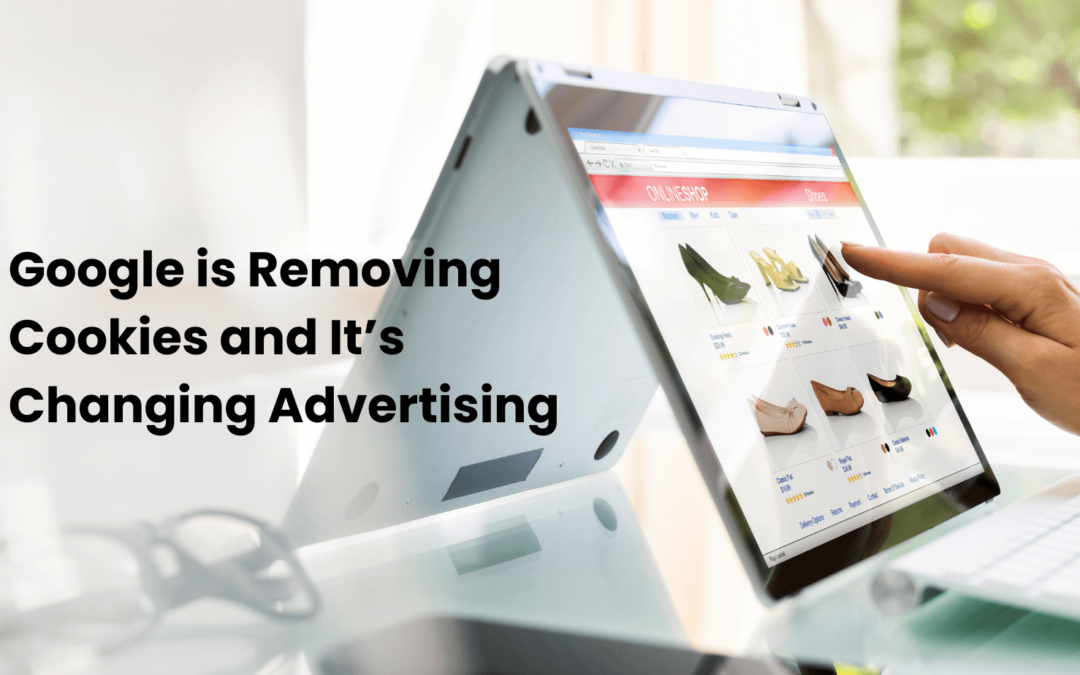
What’s happening? Google Chrome, the world’s most popular web browser, is gradually phasing out third-party cookies. These cookies are small files that track your online activity across different websites, allowing advertisers to personalize ads and target you based on your browsing habits. Why is this happening?Privacy concerns have been mounting, with users increasingly uncomfortable with tracking cookies. Governments are also tightening regulations on data privacy, putting pressure on tech giants like Google to adapt. When is it happening?The phase-out is happening in stages:
Q1 2024: Google will start testing by disabling third-party cookies for 1% of Chrome users. This pilot phase will allow them to refine their new “Privacy Sandbox” solutions before broader implementation.
Late 2024: The total phase-out is expected to be complete for all users by the end of 2024.
How will Google removing cookies impact online advertising?
Targeting: Personalized ads based on third-party cookie data will become less effective. Marketers will need to shift to first-party data collected directly from their own users and contextual targeting based on website content and user engagement.
Measurement: Tracking conversions and campaign performance will become more challenging. New measurement solutions like Google’s Attribution API will be necessary.
Reach: Some smaller websites and publishers may see their ad revenue decline as advertisers prioritize reaching audiences through other channels.
Google is not eliminating cookies entirely. First-party and contextual cookies will still be used. On top of that, Google is developing alternative solutions for online advertising that prioritize user privacy, such as Topics API and Federated Learning of Cohorts. You can learn more about this in the Google Privacy Sandbox linked below.
Business owners, marketers, entrepreneurs, or anyone else trying to sell online need to start adapting their strategies now to prepare for the cookie-less future.
But, if you really want to thrive among these changes the best thing you can do is start building your online presence RIGHT NOW. That looks like optimizing your website, enhancing your SEO, start collecting data straight from your customers and clients, and make sure your digital footprint is working for you, not against you. Remember, staying informed and adaptable is key as the digital advertising landscape evolves.
Boost Your Online Presence by Unlocking the Power of SEO Keywords and Keyword Modifiers
In the modern business landscape, establishing a robust online presence is like setting up your shop in the heart of a bustling marketplace. However, the digital marketplace is vast, and standing out among countless others requires more than just a flashy website design.
This is where Search Engine Optimization (SEO) comes into play.
Your SEO serves as your digital signage and makes sure your business is visible to those who are looking for what you offer.
Understanding SEO
SEO is like the science of digital visibility. It’s a set of strategies used to enhance your website’s ranking on search engines like Google, making it easier for potential customers to find you amid the vast digital marketplace.
The higher your website ranks, the more likely it is for people to visit your site, much like a shop located at a busy intersection is likely to get more foot traffic.
The Heart of SEO: Keywords
At the core of SEO are keywords— the terms or phrases people type into search engines when looking for products, services, or information. Much like a store might be known for selling the “best homemade apple pie in town,” your website can be recognized for specific keywords related to your business.
Remember, these keywords are something that real people are typing out, so don’t overthink it. You don’t want to go overboard either and do what’s called keyword stuffing. Your goal is to weave your keywords into your headlines and messaging seamlessly. Your website should still make sense when a customer reads it.
Where do you add the keywords?
Although search engines, like Google, will ‘crawl’ your entire website, there are places where you should prioritize keyword placement.
URLs
Meta Tiles
Meta Descriptions
Headings
The First Paragraph on Each Page
Don’t limit yourself to adding keywords in only these places, but certainly start here.
Adding Spice with Keyword Modifiers: What are keyword modifiers?
Imagine if that store with the best homemade apple pie could be found under “delicious warm apple pie” or “affordable apple pie near me.”
This is where keyword modifiers come into play. They are additional words that make a keyword more specific, targeting a narrower audience or a particular aspect of your business.
Here’s a breakdown of common keyword modifiers categorized by their intent or usage:
for beginners, for experts, for [profession], for [industry], for kids, for seniors, for students, for teams, for groups, for companies, for individuals, for professionals
Modifiers can be the extra spice that makes your digital presence more flavorful and appealing to your target audience. For instance, a bakery owner might optimize for “affordable custom cakes in [city name]” to attract budget-conscious customers in their area.
Why Small Business Owners Should Care
For small business owners, mastering the basics of SEO and understanding the power of keywords and modifiers can be a game-changer! It’s like having a store in the prime location of the digital marketplace.
Without SEO, your business could be like a hidden gem—valuable but hard to find.
With effective SEO, your digital storefront becomes easily accessible and appealing to a broader audience.
Key Takeaways
Remember, SEO doesn’t have to be a daunting technical endeavor. It’s about speaking the language your customers are using and meeting them where they are in the digital marketplace.
By strategically selecting and using keywords and modifiers, you can improve your online visibility, attract more customers, and drive your business success in the digital realm.
With the right mix of keywords and modifiers, SEO is your ticket to ensuring your small business thrives in the bustling digital marketplace.
Get Started
Don’t let the complexities of SEO hold you back! Start by adding keywords around your most popular product or service and build from there.
If you still feel like you have the knowledge but still aren’t sure where to start, reach out to us! We’ll work together to boost your online visibility, attract more customers, and drive your business forward.
If you’re not a marketing professional or in the business of promoting yourself or your clients, you may often wonder what it takes to write great copy. Many people who understand the importance of good copy recoil from the idea of having to write it themselves, and for others it comes as naturally as rain. The truth is, everyone already knows how to do it! How? Because you probably already know how to tell stories.
Once you know the proper structure and unlearn some of the stuff your high school teachers taught you about writing, you’ll be well on your way to creating mouth-watering copy.
11 Major Components to Consider for Your Marketing Copy
Pictures attract attention, but text is what sells.
A key component of crafting compelling messages is to make a strong impression. The message is everything. You either paint the picture of the joy the prospect will get using your product, or you paint the view of the hardship he will continue to endure without it. Why? Because people love stories.
To be a great marketing copywriter, understand that you should write as you talk – not formal, dull, perfect English-type speak, but with a clear, conversational style of writing. To get into that zone, imagine your prospect is right in front of you. Then have a conversation with her!
Once you’ve had the conversation, use these 11 Major Components for Your Marketing Copy:
Kickers – A kicker helps qualify your prospects and gets them to read the headline. It’s like the headline for the headline.
Kickers will intrigue the target market by being enticing and believable. Think of emotion words that would stop a prospect in their tracks.
Headlines – This is, no doubt, the most critical element.
Did you know that, on average, five times as many people will read a headline as read the content of your copy? Unless your headline sells your product or service, you may have wasted 90% of your money!
Subheads – Supports the headline and moves the reader to the body copy.
Subheads should hold attention, build on the headline, and compel the reader down the page. They are like a signpost, showing your reader which way to go.
Benefits and Features – Make a list of your benefits, features, and advantages. It’s vital to attract attention to benefits and then use features to support your claims.
Just speaking in the prospect’s language and focusing on the benefits to him or her is about 80% of compelling copy. Benefits are “emotion or feeling-based” and usually non-tangible; they are the result of what your product or service offers. A benefit answers the question, “What’s in it for me?” If what you are saying is about you, your product, service, or company, then it’s a feature.
Testimonials – Third-party endorsements help the prospect feel more confident.
There are several types of testimonials you should be gathering, including written reviews, video testimonials, and customer feedback. Also, don’t be afraid to ask a happy customer for feedback. Chances are they will have something great to say that you can show prospects to build confidence in their buying decision.
Your Offer – What’s your proposition? What problem do you solve, and how can I get it?
Refer back to your target market, the conversation with your prospect, and the core emotion. Elaborate about why your product is precisely what your target market needs or wants. Have you ever had to sell a family member on the reasoning behind a purchase you made? How did you convince them? It started with a conversation…
Consider Specials, Up-Sells, and Bundles.
People love bundles of products and services because of the increased perception of value. It’s easy to do – just bundle several related products or services together and drop the price below what the total would be if the customer bought all the products separately — using a bonus as an incentive to purchase works great, too. For up-selling, focus your efforts on meeting the customers’ needs, rather than merely pushing more products and services.
Credibility – Why are you the best choice? Give your customers and prospects reason to believe.
If you make a claim, prove it. To establish a claim that you’ve made, you must tell the truth about your product or service. Don’t use unsubstantiated claims. Instead, use support points to provide more detail. If you lack evidence or proof, you’re going to lack customer conversions.
Pricing Strategy – Don’t reveal the price until you’ve created the value unless the price is the most compelling reason to act, but it’s better to use other benefits first.
Price isn’t the most effective way to create value. Value comes from the total customer experience. When they are comfortable with your offer, they will be more likely to be more comfortable with the price. So, start by showing them first how valuable your products and services then justify the price after you reveal it.
Risk-Reversal/Guarantee – Do you have one? Guarantees usually mean more sales.
Chances are, your company has some guarantee, but many companies keep their guarantee a secret for fear that promoting it will cause customers to abuse it. Smart companies know, however, that for every customer that abuses their guarantee, there are hundreds of people who will become customers because they feel secure in knowing that if there is a problem, they’ll be taken care of until satisfied.
Specific and Measurable Action Step – What do you want the prospect to do, and how should they do it?
Ask for the order – be specific and give an incentive to act now.
Now that you have the major copy components and elements for your marketing material, you’ll be able to spot weaknesses and room for improvements. You may even be better able to notice the flaws in your competitors’ copy and can leverage your marketing to capitalize on their mistakes.
Either way, utilizing this list means you are headed in the right direction with your marketing copy. If you feel like you need more tips and tricks, or maybe your schedule is too full to implement the best marketing practices available, get in contact with us! Prime Concepts Group is here to help you. We’ll do the heavy lifting, so you can get back to enjoying results!

 Branding
 Strategic Marketing
 Creative Concepts
 Web Services
 AI Services
 Speaking & Consulting
 Website Maintenance
 About
About Careers
 Blog
Blog Tools We Suggest
 Business Growth Newsletter
 10 Tips to Transform Your Marketing