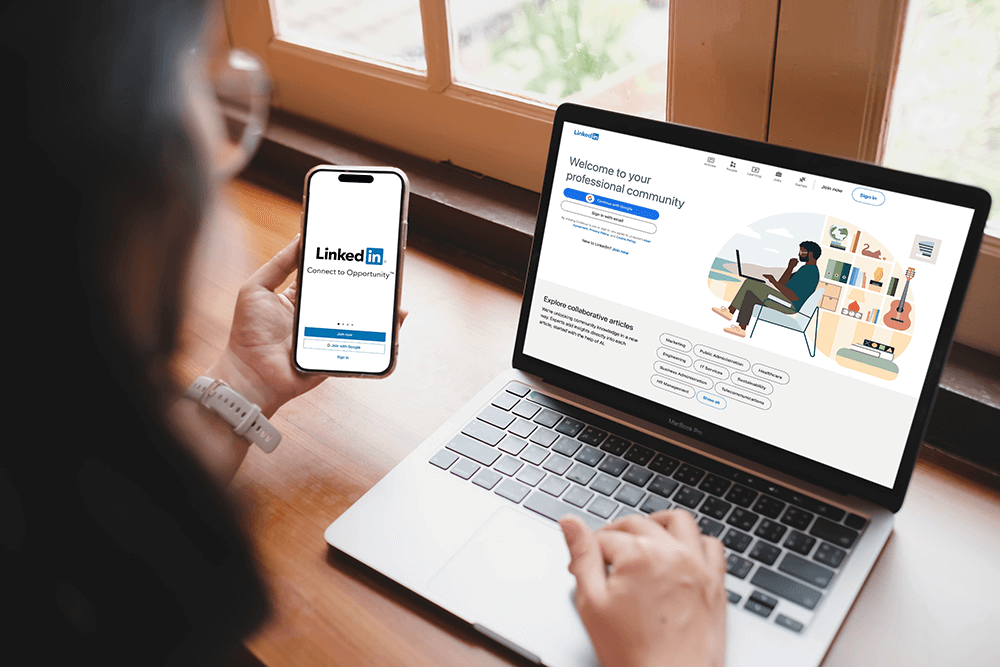
People often see marketing budgets as a necessary cost instead of a strategic advantage when making business decisions. When things get uncertain or margins get tight, marketing is often the first thing to be questioned. That reaction makes sense, but it is also where a lot of businesses lose the most money without even realizing it.
It is not about spending more when you have a well-planned marketing budget for business. It is about spending less, wasting less, and keeping money coming in. When marketing money is spent wisely, it stops costly mistakes, missed chances, and reactive decisions that drain resources.
Here are seven smart reasons why having a marketing budget for your business will save you money in the long run.
Why a Business Marketing Budget Lowers Costs and Risk
1. A Marketing Budget for Business Prevents Unnecessary Spending
Reactive marketing is expensive. When there is no clear marketing budget for a business, decisions have to be made quickly. Emergency campaigns, last-minute ads, and rushed creative almost always cost more and usually perform worse.
With a defined budget, you can plan ahead, secure better rates, and use your resources wisely before urgency forces your hand.
2. A Marketing Budget for Business Reduces Wasted Strategies
Many businesses overspend across too many tactics because they do not have a clear budget. That random approach wastes money and rarely delivers clear results.
A marketing budget for business forces prioritization. It encourages investment in channels that match your audience, your sales cycle, and your revenue goals.
3. A Marketing Budget for Business Lowers the Cost of Acquiring Customers
When marketing efforts are inconsistent, customer acquisition costs rarely improve. Stop-and-start marketing resets momentum and makes every lead more expensive.
A consistent marketing budget for business allows data to accumulate. Campaigns improve, messaging sharpens, and each dollar works harder because decisions are based on insight rather than guesswork.
4. A Marketing Budget for Business Protects Revenue During Slow Periods
When markets tighten, businesses that go quiet often struggle to recover. Even when buying cycles slow, a steady marketing budget for business keeps your brand visible and relevant.
This visibility protects existing relationships and helps sales recover faster when demand picks back up.
5. A Marketing Budget for Business Leads to Better Decisions
Marketing without a budget is emotional. Marketing with a budget is strategic. When leaders know what is allocated and why, decision-making becomes clearer and more confident.
A marketing budget for business helps leadership, sales, and marketing teams stay aligned around priorities, expectations, and success metrics.
6. A Marketing Budget for Business Improves Accountability and Measurement
You cannot measure what has not been defined. A marketing budget for business creates natural checkpoints to review performance, adjust strategy, and reallocate spend.
This level of accountability makes it easier to spot underperforming strategies early, before they quietly consume resources.
7. A Marketing Budget for Business Reduces the Cost of Missed Opportunities
Opportunity cost is invisible but significant. Every missed lead, delayed campaign, or underfunded channel represents revenue that will never be realized.
A marketing budget for business ensures opportunities are pursued intentionally instead of being lost to hesitation or inaction.
Marketing Budget for Business Questions That Come Up Often
How Much Should a Business Marketing Budget Be?
There is no single number that works for everyone. A marketing budget for business should be based on growth goals, competitive pressure, sales cycle length, and profit margins, not arbitrary percentages.
Should Small Businesses Set Aside Money for Marketing?
Yes. A defined marketing budget for business is especially valuable for small businesses because it prevents waste and ensures limited resources are used where they have the greatest impact.
Is It Risky to Spend More on Business Marketing?
Spending more without a plan is risky. Increasing a marketing budget for business while tracking goals and optimizing performance lowers risk and improves returns.
How to Make Your Marketing Budget for Business Smarter
The strongest marketing budgets are built around outcomes, not tactics. Before allocating dollars, clarify the following:
Your revenue goals
Your ideal customer
Your primary acquisition channels
Your retention and lifetime value goals
With clarity, a marketing budget for business becomes a growth tool instead of something you feel the need to defend.
If you want to understand where your marketing dollars should go and how to eliminate wasted spend, start with a strategic review.
A marketing budget for business is not about spending more. It is about spending less, protecting revenue, and building momentum that strengthens over time.
LinkedIn marketing for business is one of the most misunderstood growth opportunities available to companies today. Many leaders assume it requires daily posting, constant commenting, and endless scrolling. That assumption keeps businesses from using LinkedIn as what it really is: a relationship-building and revenue-generating platform.
If your goal is to attract decision makers, build authority, and create qualified sales conversations, LinkedIn marketing for business works best when it is intentional, focused, and systemized. Below are nine powerful strategies that help businesses win more leads without turning LinkedIn into a full-time job.
1. LinkedIn Marketing for Business Starts with a Conversion-Focused Profile
Your profile is not a resume. In LinkedIn marketing for business, your profile is a landing page. It should clearly answer three questions within seconds:
Who do you help?
What problem do you solve?
What result do they get?
Your headline should speak directly to outcomes, not job titles. Your About section should guide the reader toward a clear next step, such as booking a conversation or downloading a resource.
2. LinkedIn Marketing for Business Works Best with Fewer, Stronger Connections
More connections do not equal more opportunities. LinkedIn marketing for business improves when you intentionally connect with people who match your ideal client profile. That includes job role, industry, company size, and growth stage.
A smaller, relevant network creates better engagement, better conversations, and better results.
3. LinkedIn Marketing for Business Content Should Solve One Specific Problem
One of the biggest mistakes businesses make is posting generic advice. Effective LinkedIn marketing for business focuses each post on one specific problem your audience already knows they have.
Strong content types include:
Breaking down a costly mistake
Explaining why something is not working
Sharing a simple framework or checklist
You do not need to post every day. Two or three well-written posts per week are more than enough when they speak directly to your buyer.
4. LinkedIn Marketing for Business Requires Proof, Not Jype
Decision makers trust results, not opinions. LinkedIn marketing for business improves dramatically when you include proof such as client wins, before-and-after scenarios, and lessons learned from real campaigns.
You do not need to share confidential data. Focus on outcomes, insights, and what changed as a result of taking action.
5. LinkedIn Marketing for Business Outreach Should Start with Curiosity
Cold pitching kills relationships. LinkedIn marketing for business outreach works best when it starts with curiosity instead of assumptions.
A simple outreach flow looks like this:
Engage with a prospect’s content authentically
Send a short connection request referencing something specific
6. LinkedIn Marketing for Business is About Conversations, Not Likes
Likes feel good, but they do not pay the bills. LinkedIn marketing for business success is measured by meaningful interactions such as comments, direct messages, and booked calls.
If a post starts conversations with the right people, it is doing its job even if engagement numbers look modest.
7. LinkedIn Marketing for Business Should Move People off the Platform
LinkedIn is not the destination. It is the starting point. Strong LinkedIn marketing for business guides people toward owned assets such as your website, email list, or strategy session.
Use clear calls to action that invite the next step without pressure.
AI is changing how people search, choose, and evaluate businesses. Yet most websites are still built for a world driven by keywords, not intelligent systems. Many organizations are adding new AI tools into their workflow, but the real bottleneck is not the tool. It is the website those tools rely on.
AI SEO Optimization for Websites focuses on preparing your site so AI systems can interpret, categorize, and recommend your content with confidence. This work requires strategy, structure, and experience. It is not something most businesses can do effectively on their own, and the cost of waiting is lost visibility as AI driven search becomes the new standard.
Below are seven essential facts every business should understand before deciding how to move forward.
Can AI do SEO optimization?
AI can support SEO tasks, but it cannot optimize a website effectively unless the site is already structured for AI systems to understand.
AI tools help with ideas, content organization, and technical reminders, but they cannot evaluate website context, business goals, customer behavior, brand voice, or competitive positioning on their own. If the website is unclear, unorganized, or outdated, AI produces equally unclear recommendations. AI SEO Optimization for Websites begins with the structure, clarity, and semantic foundation that AI models need before any tool can be useful.
Will AI replace SEO?
AI will not replace SEO, but it has completely changed how SEO works and what websites need to stay visible.
Search is moving from keyword matching to meaning based interpretation. AI driven engines care about context, relationships, clarity, accuracy, and user intent. Traditional SEO tactics are no longer enough. Websites must be optimized for how AI systems read, categorize, and connect information. This requires technical adjustments, content alignment, messaging consistency, schema, and clean architecture. AI has not made SEO obsolete. It has raised the standard for what SEO must accomplish.
What is the best AI tool for SEO?
There is no single best AI tool for SEO because tools cannot create results without a well optimized website to support them.
Searchers often ask whether ChatGPT, Gemini, Claude, Surfer, or another AI tool is best. All of them can help, but none of them can fix a weak foundation. If the website lacks structure, clarity, or semantic organization, every tool will produce inconsistent or inaccurate suggestions. AI tools accelerate parts of the process, but a properly optimized website determines whether those tools work at all. This is why expert support is essential before relying on any platform.
Is AI making SEO obsolete?
AI is not making SEO obsolete. It is making it more important and far more technical.
AI powered search relies on clean structure, accurate information, consistent messaging, and clear relationships between topics. If AI cannot interpret a website, it will not recommend it. The more AI influences how people find information, the more critical it becomes for your website to function in a way that AI can understand. AI SEO Optimization ensures that AI systems can read, trust, and surface your content.
Can ChatGPT do an SEO audit?
ChatGPT can assist with certain audit tasks, but it cannot replace a full AI SEO evaluation performed by experienced professionals.
ChatGPT can point out missing elements, suggest improvements, and highlight basic issues. What it cannot do is analyze deeper structural problems, understand your competitive landscape, customize recommendations to your business model, evaluate user experience, or identify long term opportunities. AI SEO Optimization for Websites requires hands on expertise. AI tools support the process, but they cannot lead it.
How do you rank in AI search results?
You improve your visibility in AI search results by making your website easy for AI systems to understand, categorize, and recommend.
AI driven search models look for meaning, clarity, structure, accurate information, and strong connections between related topics. They rely on semantic hierarchy, schema markup, consistent internal linking, clean navigation, and clear content relationships. Websites that provide this structure are far more likely to be included in AI generated answers. Websites that lack it are ignored, no matter how good the content may seem.
Is AI SEO worth it?
AI SEO is worth the investment because it prepares your website for how people now discover information through AI driven search results and AI powered assistants.
AI SEO Optimization for Websites is not an optional upgrade. It is how businesses maintain visibility as search engines, generative platforms, and AI agents change how people solve problems and evaluate brands. Without structural clarity, semantic organization, schema, and consistent messaging, AI systems cannot interpret or recommend your content. This leads to a steady decline in visibility.
Most organizations do not have the time, experience, or internal resources required to manage this level of optimization correctly. It involves technical adjustments, strategic planning, ongoing content alignment, and detailed execution. This work is too complex to rely on tools alone, and the cost of getting it wrong is lost visibility in the platforms people now use to make decisions.
Prime Concepts prepares your website for AI driven search and ensures your content is structured in a way AI systems understand and trust.
More than half of all Google searches now finish without the consumer clicking on a link.
Yes, that’s true: 60% of individuals who search obtain their answers straight away from AI tools like Google’s AI Overviews or ChatGPT, and they never go to your site.
You can be losing potential consumers every day if you simply utilize traditional SEO to obtain traffic and leads.
The Problem: The Zero-Click Challenge Is Real and Getting Worse
People search in new ways now that there are answer engines that use AI.
They give you rapid, correct answers immediately on the page of search results.
What are the bad things? Fewer clicks, less organic traffic, and fewer chances to turn leads into paying clients.
But here’s the twist: AI isn’t killing SEO; it’s making it better.
If you can adjust quickly, this new dynamic can actually help your firm develop faster than it did before.
To stay visible in this new search environment, your website must be optimized for how AI tools like ChatGPT, Google AI, and Perplexity read and recommend content.
Companies that are ahead of the curve are already getting a lot out of optimizing for AI-driven search.
According to research, AI search traffic converts up to 4.4 times better than conventional organic traffic.
Why? When an AI tool promotes your business, it’s like getting a tip from an expert you trust.
In the end, you have more qualified leads who are ready to buy.
1. Write content that AI will want to use.
AI answer engines require information that is well-organized and easy to read.
To get those AI jobs that are in high demand:
Write brief, concise words that answer the user’s questions right away.
Make it easier to read by using bullet points and questions and answers.
Add information that is specific to the area to get the attention of those who are looking for things nearby.
This makes your content the “go-to answer” for both people and AI tools.
2. Make AI trust authority
AI doesn’t just look at keywords; it also cares about how reliable and detailed a topic is.
To gain that trust:
Put together groupings of content about relevant subjects in your field.
Make sure that the information you have is always up to date and relevant to what users seek.
Make sure your Google Business Profiles and local citations are as strong as they can be to improve your local relevance.
When your site consistently offers accurate, knowledgeable material, AI recognizes you as an authority worth highlighting.
3. Make the ecology around your brand bigger
AI suggestions are better when your brand is well-known online.
To make that ecosystem, perform these things:
Writing in diverse formats, such as blogs, videos, podcasts, and posts on social media
Getting mentions, backlinks, and collaborations on credible sites
Being a part of local and specialty communities in a meaningful way
AI will promote your brand more confidently if it can find more signals on the web.
4. Hire AI SEO professionals who are familiar with the location.
You need more than simply tools to win in AI-driven search; you also need a plan and experience.
That’s when Prime Concepts Group (PCG) comes in.
Our AI SEO team is adept at:
Making backlinks that AI systems trust and put at the top of their lists
Using AI answer optimization approaches to make sure that AI summaries include you
Making content that is specific to a certain location and attracts qualified leads from that place
Partner with PCG to get the most of your AI SEO investment, save time, and minimize risk.
Prime Concepts Group is the company that businesses trust to help them become the best in the age of AI search.
5. Use AI-powered analytics to track and change
You can’t get better at anything if you don’t keep an eye on it.
To keep getting good results in this new search environment:
Use AI-powered analytics tools to keep track of brand mentions and zero-click impressions.
Learn what pages are included in AI summaries.
Change the content and layout based on performance data as it comes in.
PCG helps companies use AI insights to get ahead of the competition. They make sure that every piece of content leads to measurable company success.
The Bottom Line
AI is changing SEO, but it’s not going away.
Businesses that adapt now will not only survive, but they will also do well when search engines change.
Don’t let searches that don’t get clicks make you less visible.
PCG can help you turn AI into your next growth engine.
Ready to Turn AI Search Into Your Next Growth Engine?
Call Prime Concepts Group immediately to make sure your marketing is ready for the future and to obtain more quality leads in the age of AI-powered search.
Explore how our AI Consulting & Integration Services can help you harness AI for smarter marketing, stronger SEO, and measurable business results.
An AI-friendly website isn’t just about rankings anymore—it’s about being recommended by the tools your customers already trust.
The search landscape will never be the same again. SEO that has been around for a long time is changing quickly. It’s not enough to merely rank well on Google these days. You also need to be found, understood, and recommended by AI-powered tools like ChatGPT, Perplexity, Claude, and Google’s Gemini.
The harsh truth is that if AI can’t locate you, understand you, and suggest you, neither will your prospects.
For the past 30 years, Prime Concepts Group has helped businesses get the most exposure possible. We are now at the forefront of AI-friendly website optimization. We use Answer Engine Optimization (AEO), Generative Engine Optimization (GEO), and classic SEO to make sure our clients don’t just have a presence online, but rule their digital domain.
Why AI Optimization is Important Right Now
The regulations for being seen online have altered in a big way:
AI tools are now the people who let you talk to your future consumer.
AI assistants and voice search are answering inquiries without people ever going to a website.
AI citations and featured snippets decide who is suggested as the expert.
Structured data and schema markup are now necessary, not just nice to have.
The future generation of consumers won’t be able to find, comprehend, or trust your material if your website isn’t set up in a way that AI systems can do all three.
The Three Parts of AI Friendly Website Optimization
1. AEO, or Answer Engine Optimization
AEO is all about giving your audience immediate, concise answers to the issues they have. This means:
Making full FAQ pages with structured data
Writing information that directly answers questions like “how,” “what,” “why,” and “when”
Using language that sounds like how people really search in a natural way
Adding FAQ schema markup so that AI can find and use your responses
For instance, instead of saying, “Our services include various marketing solutions,” you may say, “What marketing services does Prime Concepts Group offer?” We help B2B and B2C businesses with digital campaign management, brand identity design, website building, and strategic marketing.
2. Search Engine Optimization (SEO)
These basics are still very important, even though traditional SEO is always changing:
Content that has a lot of keywords and matches what the user wants
Responsive design that works on all devices, starting with mobile
Pages load quickly (less than 3 seconds)
Backlinks from trusted sources that are of high quality
Regularly updating content to show that it is new and useful.
3. Optimization of the Generative Engine (GEO)
GEO makes sure that AI language models can find and suggest your business:
robots.txt optimization to let AI crawlers get in
Full pillar pages that show expertise in a subject
Topic clusters that show a lot of knowledge in a field
Schema markup for all kinds of material
AI can read and grasp clear, organized information.
Important Technical Parts for AI Discoverability
Give AI Crawlers Access to Your Site
You need to make sure that your robots.txt file lets these AI crawlers through:
ChatGPT-User (OpenAI)
GPTBot (OpenAI training)
Claude-Web (Anthropic)
Perplexity AI’s PerplexityBot
Google-Extended, which is Google’s AI
CCBot (Common Crawl)
Amazonbot (Amazon’s AI)
Important: Most websites that were made before 2024 weren’t set up to be found by AI. It’s not your webmaster’s fault; this is a new area that needs unique skills.
Use Schema Markup
Schema markup is a type of code that tells AI exactly what your content is about. Some important forms of schema are:
Organization Schema: The information about your firm
LocalBusiness Schema is for services that are based on location.
Questions and AnswersPage Schema—Makes it easy to find Q&A pairings
Article Schema: Sets the authority of the content
Person Schema: Connects your brand to knowledge
HowTo Schema: Content that is organized into steps Service Schema: A description of what you offer
Make Meta Descriptions Better
Every page needs a unique and interesting meta description (150–160 characters) that includes:
Keyword that is naturally included
A clear value proposition
Language that encourages action
A sign of credibility
Formula: [What you do] for [those you serve] to get [the desired result]. [What makes you stand out].
Add Alt Text That Describes
AI can’t “see” pictures, but it can scan alt text to figure out what they mean. Every picture needs alt text that describes it.
Tells what the picture is about
Includes keywords that are related in a natural way
Tells what the picture is for
Keeps below 125 characters
Content Strategy for Getting the Most Out of AI
Make Pillar Pages for Your Main Products
Pillar pages are long (over 2,000 words) authority hubs that cover your primary areas of expertise:
A strong headline with the main keyword
A clear introduction that explains the problem and the solution
Table of contents for easy scanning
Full parts with H2 and H3 headings
Visual elements with alt text that describes them
Links to related content throughout the page Clear calls to action throughout
Author credentials to show that they are experts
Updates on a regular basis to keep things fresh
Make a Strong FAQ Page
Your FAQ page should address between 15 and 25 questions, such as:
The whole journey of the customer
Common reasons for not agreeing
Questions like “how,” “what,” “why,” and “when”
Terms that are peculiar to the industry
Each answer should be between 150 and 300 words long and have connections to related pillar sites so that people can learn more.
Make “How-To” Content
AI loves stuff that is structured and follows rules. Make guides that show you how to do things step by step:
A clear title is “How to [Achieve Outcome] in [Timeframe].”
Introduction that explains why it important
Steps with numbers and predicted results
Visual assistance like screenshots and diagrams
How to use schema markup
Summary and what to do next
Publish Definitions of “What Is”
Be the one who owns the definitions in your area. Your definition should come up when someone asks AI, “What is [your specialty]?”
Define the structure of the content with:
A clear definition in one sentence
More details with context
How it works part
Why it matters to your audience
Misunderstandings that are common
How to get started
Make Comparison Content
AI searches often look for comparisons. Make “X vs. Y” articles that:
Explain both choices clearly
Give side-by-side comparisons of features
Make a list of honest pros and negatives
Give people ways to make decisions
Give your best advice
How to Measure AI Discoverability
Try out these questions with different AI tools to see how visible your AI is:
“Who are the best experts in [your field]?”
“Best [your service] consultants for [your audience]”
“How to [fix the problem you talk about]”
“What is the [term you want to own]?”
“Suggested [your profession] in [your location]”
Try out ChatGPT, Claude, Perplexity, Google Gemini, and Bing Chat.
Track these key metrics:
More traffic from organic search
More searches for brands
References in AI answers
Links from other sites to pillar pages
Requests for quotes or interviews
Why This Needs to Be Done by an Expert
You know what needs to be done now, but here’s the truth: This is specialist, technical labor that most business owners don’t have the time or knowledge to accomplish.
Most websites, even ones made by expert webmasters, weren’t made to be easy for AI to find. The terrain has changed a lot, and to adapt existing locations, you need:
A lot of technical know-how about how to build schemas
Knowledge of AI crawler protocols
Expertise in content strategy
Ongoing monitoring and improvement
Keeping up with AI trends that change quickly
What Prime Concepts Group Can Do for You
We at Prime Concepts Group connect traditional marketing with AI optimization. Our staff has 30 years of experience in marketing strategy and uses cutting-edge AI optimization methods to make sure that your website is not only online, but also easy to locate, understand, and suggest by the most powerful AI systems today.
Our full AI optimization services include:
✅ A full technical audit of your current site
✅ Optimizing robots.txt for all major AI crawlers
✅ Implementing schema markup for all relevant types
✅ Creating and optimizing a pillar page
✅ Developing a FAQ page with the right structure
✅ Planning and executing an internal linking strategy
✅ Optimizing meta descriptions across your site
✅ Optimizing alt text for all images
✅ Planning topic clusters and content strategy Ongoing monitoring and improvement
We’ll change your website from being invisible to AI to being the first thing people see when they go for AI recommendations.
The Bottom Line
The digital world has changed in a big way. AI-powered answer engines now choose which brands, businesses, and information to recommend to your potential customers. Every day, you’re missing out on chances if your website isn’t set up for AI to find it.
It’s not enough to just do traditional SEO anymore. You need a complete plan that includes Answer Engine Optimization, Generative Engine Optimization, and traditional SEO. All of these should work together to make you the go-to expert in your field.
Make Your Business AI-Discoverable
Let us make sure AI finds you, understands you, and recommends you.

 Branding
 Strategic Marketing
 Creative Concepts
 Web Services
 AI Services
 Speaking & Consulting
 Website Maintenance
 About
About Careers
 Blog
Blog Tools We Suggest
 Business Growth Newsletter
 10 Tips to Transform Your Marketing